
The New School / Parsons School of Design / MFA ID, Global Studio, Fall 2025
UN Sustainable Development Goals + Design for Decarbonization frameworks guide the semester’s research, creative thinking, and design solutions.
Lead by Adjunct Professor: Shaun Fynn, StudioFYNN / Advisor & Collaborator: Lew Epstein, Lot21 / Part-time Lecturer: Zac Feltoon
Invasive Matters / Ashli Watson

Invasive Matters creates a climate-resilient, circular manufacturing model that transforms invasive plant biomass into hi-performance, non-toxic materials for interior and exterior architecture applications.
By diverting biomass waste streams and decreasing reliance on extractive, carbon-intensive materials, this innovative Public Benefit Corp. provides a scalable pathway for sustainable industrial design rooted in ecological health and long-term restoration.
Rising from the Rubble / Anna Malinak
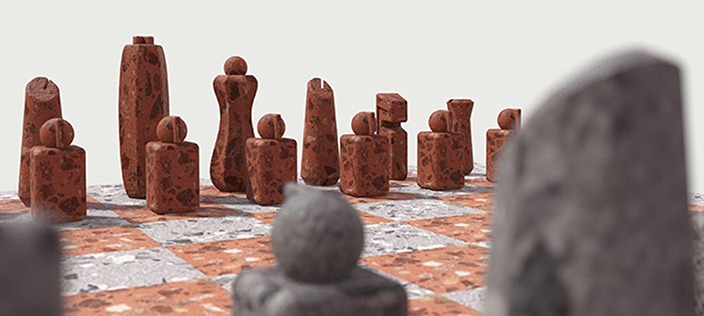
Rising from the Rubble explores new ways to repurpose the otherwise unusable building materials in the aftermath of climate-related disasters. By combining these materials with Geo-polymers, this project envisions innovative composite materials that are both resilient and sustainable.
Through diverting debris from landfills and decreasing the need for virgin building materials, this method promotes responsible waste management and minimizes the environmental impact of reconstruction.
NYtra / Hitesh Beedu

NYtra tackles the last-mile challenge in NYC intra-borough transit, where uneven subway and bus connectivity can leave commuters stranded before reaching their destination.
Its compact design is supported by a swappable battery system and solar rooftop, to create an efficient and sustainable solution.
This research-driven, climate-positive project aims to complement existing public transport networks and transform daily travel for residents by providing carbon-free mobility.
Underline / Eliot Wolfert
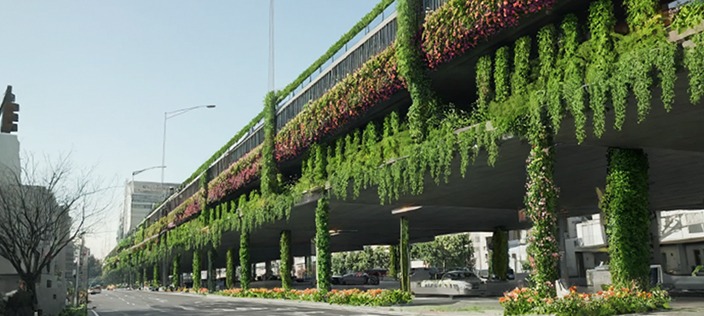
Underline turns underutilized spaces, the underpass, into climate-resilient havens that help humanize and decarbonize our cities.
Designed as an open-source, 3D-printable, tailorable system, and adhering to circular design principles, various plant selections are informed by each site’s growing conditions.
The system may be deployed independently through neighborhood communities or as a fully integrated component of a city’s Parks and Maintenance Department.
The New School / Parsons School of Design / MFA ID, Global Studio, Fall 2024
UN Sustainable Development Goals + Design for Decarbonization frameworks guide the semester’s research, creative thinking, and design solutions.
Lead by Adjunct Professor: Shaun Fynn, StudioFYNN / Advisor & Collaborator: Lew Epstein, Lot21 / Part-time Lecturer: Zac Feltoon
ADAMA / Jonah Goodman

ADAMA is the first naturally derived probiotic pill specifically designed to restore and revitalize eroded soil. By harnessing the ancient agricultural art of bokashi fermentation, ADAMA transforms organic waste into nutrient-rich bioavail-able compounds that enhance soil fertility, structure and carbon capture potential.
ADAMA envisions the future of regenerative agriculture and the means to reclaim Earth.
Bioshoe / Gabriela Kreutzberger

Bioshoe is a footwear solution designed to meet the needs of children in Sub-Saharan Africa who could not afford shoes, which are required to attend school.
The Bioshoe is made with biochar derived from locally sourced agricultural waste and produced using affordable equipment.
For every pound of biochar, about 2 pounds of CO2 is removed from the atmosphere. At the end of their life, Bioshoes decompose, sequestering CO2 in local soil.
EOS / Leon Bora Yegenoglu

EOS is a low-power filtration system that captures toxic airborne particulates such as micro-plastics and various greenhouse gas emissions from transportation and local industry sources.
Designed to be a robust, low maintenance, street-level solution for urban areas, EOS includes lighting and operates on self-generating wind and solar energy.
Aquabloom / Leonardo Possati

Aquabloom is a foldable rain and fog collector designed for easy transport and assembly, offering sustainable water harvesting, storage, and communal spaces for off-grid communities in remote areas.
Aquabloom can be set up during the wet season to capture excess rainwater and store it for the dry season, providing a climate-adaptive solution when naturtal water resources are unavailable.
Pangolins / Jiarui Yue

Pangolins proposes a novel approach to to prevent deforestation and preserve forests as natural, vital carbon storage sinks.
Pangolins, primarily found in Southeast Asia and Africa are illegally poached and trafficked for their keratin. However, their diet of termites aids in regulating the forest against insect infestations and destruction, contributing to a balanced ecosystem.
Protecting pangolins reduces the termite population, allowing forests to thrive.