Fall 2025 / quarterly

Overview
It’s harvest season in the northern climes, and we’re celebrating Lot21’s second anniversary. Fall gives us a time to reflect on topics we’ve covered in the past months and to sow seeds to reap in the coming year.
Lately, many of you have read about or experienced the challenges firsthand in pursuing climate action. Funding rollbacks and setbacks to climate commitments are discouraging advocates. And it’s happening while climate change accelerates, which compounds the need for a more active and comprehensive response.
But despite these obstacles, progress persists, revealing the steadfast spirit and commitment of stakeholders everywhere.

Happening Now
Today, local and state climate policies, whether proposed or enacted, serve as reliable indicators and public reminders of each community’s engagement. Meanwhile, we can see national and international policies signaling their long-term commitments. Innovation continues to brew in universities, and carbontech startups are highlighting new ways not only to reduce emissions but, in parallel, remove them in the years ahead.
Look no further than the City CDR Initiative, co-led by members of the design and carbon communities, on a bold mission to embed Carbon Dioxide Removal (CDR) into city planning worldwide. The initiative envisions cities as “carbon sinks” embedding carbon removal into urban planning and the built environment. This timely integration of low-carbon building materials, climate technologies, and enabling policies foretells the crucial role that carbon dioxide removal can play in helping to restore our climate.
Altogether, these examples show no shortage of ideas or will to pursue climate action. Instead, they reveal the steady stream of communities, companies, and countries working towards building a livable future. Now, more of us need to participate and build on this momentum.
Looking Forward
In 2026, we’ll continue amplifying the exemplary work of those advancing climate resilience, emissions reduction, and carbon removal (the three pillars of climate action) by spotlighting the diverse creators responding to climate change and inspiring others to join them.
Our focus remains on designing for decarbonization through innovative biological, technological, and experimental approaches. And we’ll elevate carbon removal efforts further because, once removed, carbon utilization has a direct, actionable, and exponential effect on the design community. We can see the pace and near-term progress for this utilization becoming economically viable, even though it still feels unfamiliar and nascent to many.
Repurposing Carbon
As the practice of circular design grows worldwide, so does the opportunity to link carbon utilization to one of its 9Rs, Repurposing. Through this practice, CO2 emissions — removed from the atmosphere or from a point source, such as a smokestack — can become repurposed for a wide range of uses in the built environment.
CO2 emissions from airborne waste are warming our world. But they also present an abundant resource that can be tapped to create new materials and develop emerging industries, thereby increasing profits and job opportunities.
For the design disciplines that shape the built environment, carbon utilization promotes the circular production of fossil-free products and construction materials, helping to decarbonize the world. And the more demand we create for this now, the sooner this future will arrive.
Now Becomes Next
Our forthcoming winter newsletter will showcase a brand-new selection of Parsons School of Design ID graduate student projects. It is the second year of this progressive curriculum, in collaboration with Lot21, and we hope you’ll find these fresh concepts as exciting as we do. You can view the previous year’s graduate-level selections in Academia.
We’re also in the planning stage of incorporating Lot21’s climate action framework into the curricula of other leading design schools. The framework easily complements circular design programs by integrating a distinct climate-action lens, thereby preparing the next generation of systems design thinkers to address climate change better.
With you, we can do a lot more!

Lew Epstein
Founder / CEO
The Year In Review — Our 2025 Quarterlies

Parsons School of Design, MFA ID, Global Studio, stands out for its commitment to forging a better future through designing for decarbonization. Guided by the UN’s Sustainable Development Goal (SDG) #13: Climate Action, and its three pillars — climate resilience, emissions reduction, and carbon removal — the globally diverse graduate students developed projects ranging from children’s footwear made with biochar to a new regenerative agriculture practice. Beginning with research and discovery, concepts were translated into physical prototypes, with each iteration informing and improving the next.
The Class of 2025 demonstrated concepts that are both viable now and promising for tomorrow, illustrating how rigorous education and creative collaboration can raise climate literacy and
catalyze meaningful action. Moreover, these students’ work reflects a generation’s conviction that restoring our climate can — and should — be a standard practice, and that all of us can find a way to participate in this quest.

A groundbreaking study reveals that up to 89% of people in 125 countries desire more decisive climate action, though many are unaware they form part of this silent majority. Global efforts like The 89 Percent Project are amplifying this collective will and encouraging more individuals to join the movement. Opportunities to contribute to climate progress — such as staying informed via accessible news and podcasts, joining advocacy groups, and sharing resources — are increasingly global and inclusive.
While not everyone will be a climate activist, we can all be climate pragmatists, making practical, science-based choices and inspiring others to act. Your participation, no matter how big or small, multiplies our impact and moves us closer to a safer, more sustainable future. Together, as a rising majority, we can drive meaningful change.

Given the worrisome global forecasts of increasing waste levels by 2050 — particularly rising carbon emissions — it’s encouraging to see innovative methods for sustainably managing solid (visible) and airborne (invisible) waste streams now. Companies are shifting toward more circular, closed-loop systems that minimize and optimize waste by rethinking materials and manufacturing processes from the start. This includes carbon removal and its use in building materials and products, opening up a new frontier for low-embodied-carbon solutions.
Across industries and the design and carbon communities, we see innovators turning waste into value by adopting circular practices in their daily decisions and advocating for responsible policies supporting this shift. Ultimately, transforming the world’s ever-growing waste streams will become an integral part of modern production and waste management — because it’s practical, marketable, and necessary for achieving net-zero emissions by 2050.
Projects
Collected works at the forefront of climate action
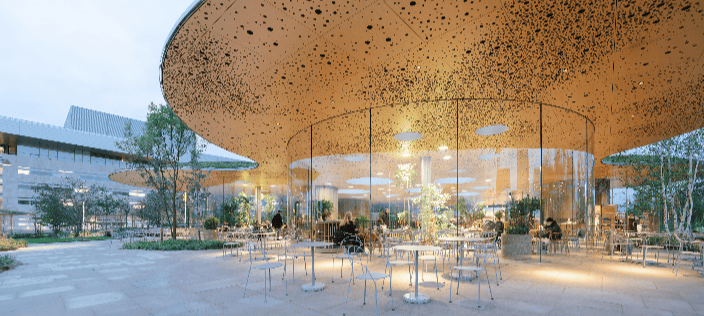
The Opera Park
This award-winning project transforms a former industrial island in Copenhagen’s harbor into a diverse parkland for recreation and contemplation, including a greenhouse situated above an underground car park.
The elevated, climate-resilient terrain is designed to protect the park from flooding caused by heavy rains or rising harbor water levels. Its green roofs capture and control rainwater runoff while the park and its buildings are powered by solar energy.
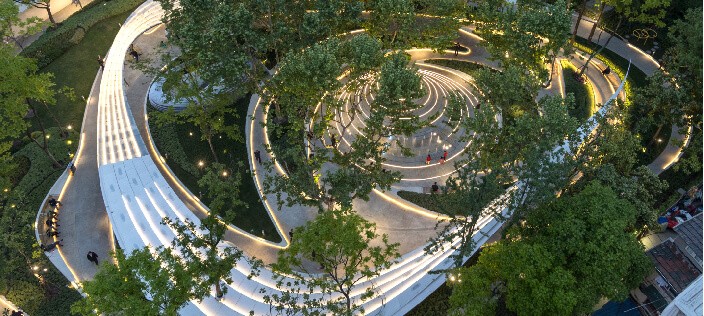
Rihui Green Space: The People’s Forest
The primary design challenge at this historic site was to preserve its 1950s green space heritage, while meeting the needs of its multigenerational community — sustainably.
A complex network of tree roots hindered traditional light pole placement, leading to the creation of an innovative Photosynthetic Ring, fitted with solar panels. This seamlessly Integrated, self-sustaining solution provides power at night, free of carbon emissions.
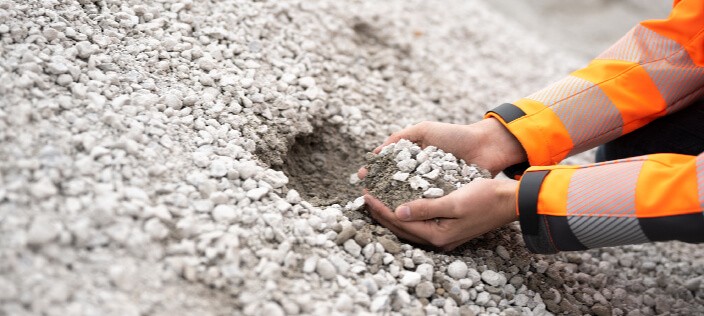
Neustark
Neustark, located in Bern, Switzerland, is a leading provider in the rapidly growing carbon removal (CDR) field, creating a scalable solution that turns demolished concrete and other mineral waste streams into a permanent carbon sink through mineralization — a proven process that can be seamlessly integrated into existing industrial infrastructure. Deploying such CDR solutions are becoming indispensable for achieving net-zero goals by 2050.
Resources
Materials and tools to help decarbonize the world

Cassava, a versatile starchy root vegetable, can be utilized as a material for industrial purposes such as bioplastics, to support sustainable development — provided the right technology, farming practices, and policies are in place.
Explore the examples below and many other resources in our materials directory.
Avani offers a full range of biobased packaging and hospitality products made from renewable, natural ingredients that are fully compostable. Their bags, for example, are made from cassava starch, vegetable oil, and other natural materials.
Bioinnovate Africa is a regional science and innovation-driven initiative that works with biobased and biodegradable packaging for the East African market. The packaging is developed from cassava waste and other biowastes that are native to this region.
Universidade de Sao Paulo researchers are creating biodegradable packaging from plant-based and agro-industrial waste to replace plastic. Their packaging includes compounds that extend shelf life or indicate food spoilage, like grape-skin extracts in cassava starch films, which are scalable, malleable, and heat-resistant.

Circular Design strategies & resources focus on creating solutions with the end in mind — transitioning from linear processes to closed-loop circular systems, and prioritizing longevity to drive the circular economy toward a sustainable future.
Dive deeper and discover far more resources in our growing tools directory.
The 9R Framework, developed by CE Grow Circular, readily applies to circular design and defines strategies for circularity that can be used to build successful circular products and material flows.
The Ellen MacArthur Foundation focuses on the built environment, exploring its impact, and offering solutions, business models, toolkits, and strategies to implement circular design, achieve net-zero outcomes, and drive sustainability in the industry.
Design for Freedom International Guidance Toolkit from Grace Farms, offers guidance in circularity and regenerative practices to reduce emissions and promote ethical sourcing.
Policy
Advancing climate action through legislation

National policies include legislation to procure lower-carbon construction materials for publicly funded projects. For example, the States Buy Clean Partnership includes over a dozen state governments, illustrating how states are working together to advance climate action in the built environment.
Compare states — leading or needing climate legislation now in our directory.
Buy Clean standards, also known as embodied carbon standards, represent a procurement policy approach that incorporates low-carbon requirements into construction material purchases to reduce greenhouse gas (GHG) emissions.
The U.S. Climate Alliance is a bipartisan coalition of governors working to secure America’s net-zero future by advancing state-led, high-impact climate action.
The Alliance includes 24 governors from across the U.S. representing approximately 60% of the U.S. economy and 55% of the U.S. population.
All states can be easily found in our alphabetical directory here

Our International directory connects designers to each country’s Nationally Determined Contributions (NDCs), industry advocacy groups, and how to participate. The NDCs make it easy to compare each country’s global greenhouse gas emissions (GHG) and gain a more comprehensive view of global climate action.
Explore countries — their NDCs and GHGs listed under the letter E.
Ecuador NDCs / 2019 / global GHG emissions: 0.02%
Egypt NDCs / 2023 / global GHG emissions: 0.63%
El Salvador NDCs / 2021 / global GHG emissions: 0.03%
Equatorial Guinea NDCs / 2022 / global GHG emissions: 0.03%
Eritrea NDCs / 2018 / global GHG emissions: 0.01%
Estonia NDCs / 2020 / global GHG emissions: 0.03%
Eswatini NDCs / 2021 / global GHG emissions: 0.01%
Ethiopia NDCs / 2021 / global GHG emissions: 0.42%
European Union NDCs / 2020 / global GHG emissions: 6.22%
All countries can be easily found in our alphabetical directory here.
Lots
New initiatives to help decarbonize the world

FASHION MEETS BIOTECH
CAN HELP TRANSFORM
THE FASHION INDUSTRY
Phycoplabs
Thamires Pontes is the founder and CEO of Phycolabs, where she leads the creation of innovative solutions that promote cleaner and more technologically advanced fashion.
Based in São Paulo, Brazil, Phycolabs’ mission is to promote a sustainable and regenerative textile future. To fulfill this mission, Phycolabs is preserving biodiversity while strengthening the entire value chain at the intersection of fashion and sustainable biotechnology.
CLIMATE-SMART AFRICA
ON THE AFRICAN CONTINENT
Africa Climate Ventures
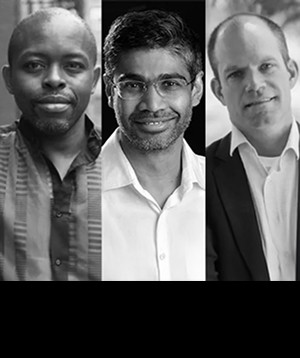
James I Mwangi, Mohamed Cassim, and CJ Fonzi are Co-Founders of Africa Climate Ventures, identifying opportunities to develop climate-smart businesses across the African continent. Africa is well-positioned to tap into new climate-related business opportunities, and ACV actively invests in these key areas:
— Circular economy
— Climate-smart agriculture
— Climate-positive built environment
— E-mobility
— Carbon removals and green industry

FROM SOURCE TO SINK
INTO A HIGHLY SCALABLE
CARBON REMOVAL SOLUTION
Neustark
Lisa Braune is the Head of Carbon Dioxide Removal (CDR) at Neustark, where she is leading the efforts to combat climate change by removing CO2 from the atmosphere and permanently storing it in demolition concrete and other mineral waste streams.
Based in Bern, Switzerland, Neustark aims to remove one million tons of CO2 by 2030, and is currently expanding its footprint by constructing new storage facilities throughout the European Union.
Listening & Reading Suggestions

A Matter Of Degrees:The Only Good Planet / Interview with Kate Marvel

CDR Policy Scoop:Interview / Chris Neidl, UN High-Level Climate Champions
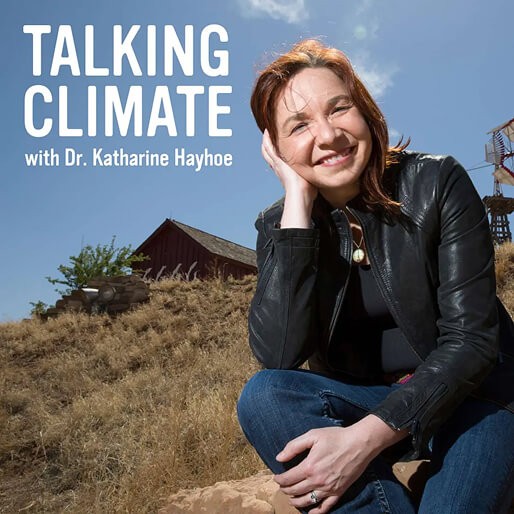
Talking Climate:What The World Has Gained (and lost) Since The Paris Agreement

Systems Change Lab:State Of Climate Action 2025
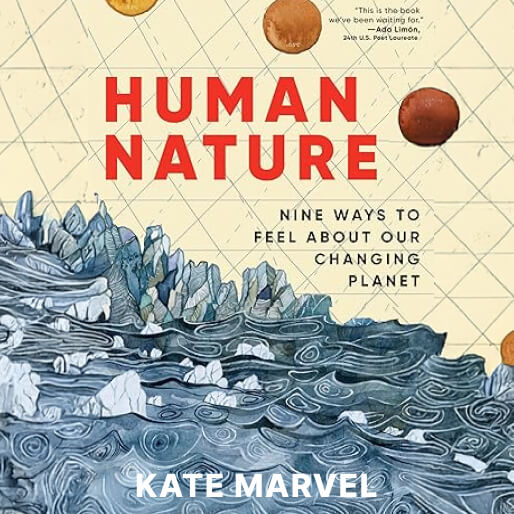
Human Nature:Nine Ways To Feel About Our Changing Planet