Summer 2025 / quarterly
Overview
The world’s waste is on full display — left along curbsides, in landfills and waterways, or headed on ships overseas. But at the same time, our invisible waste, in the form of carbon emissions, is accumulating in the atmosphere, lasting for centuries, and warming our world.
Here’s a tale of two waste streams and how we can utilize them for the greater good.

More waste, more warmth, missed targets
Let’s begin with a snapshot of our current and future waste. While the news is sobering, this isn’t meant to be discouraging; it simply provides context for our choices looking forward.
As the world’s population grows, the increased demand for goods and services leads to higher energy consumption, primarily generated from fossil fuels. Altogether, this increases the world’s waste, particularly in the form of solids from agricultural, municipal, and industrial sources, as well as gases (carbon emissions) from the burning of fossil fuels that power most sectors.
But our planet has limits, and we’re exceeding them now, which is making this situation unsustainable.
We usually focus on solid waste because it’s visible, tangible trash. But, as carbon emissions add to the world’s total pollution, it’s essential to manage – and even more, utilize – both waste streams better. Because without comprehensive waste management strategies in place by mid-century, we’ll surely miss critical net-zero targets. More waste, more warmth, missed targets.
To visualize this climatic challenge, let’s compare the projections for both waste streams by mid-century.
- By 2050, the global volume of solid waste is projected to increase by 70-75% compared to current levels, according to UNEP, the World Bank, and Statista. That’s an astounding accumulation.
- Carbon emissions (CO2) have increased by a staggering 50% since the pre-industrial era, according to NOAA records. Over the past 800,000+ years, these levels have steadily measured below 300 ppm (parts per million). The upshot of this increase in such a short historical timeframe is the corresponding rise in global temperatures we’re experiencing today. And if current emission rates persist, the IPCC projects that CO2 levels could rise from their present level of 427 ppm to about 550 ppm by 2050. If that happens — the world’s temperatures will rise even higher.
Less linear, more circular
Considering the alarming forecasts for 2050, it’s encouraging to see that both waste streams can and are being managed more responsibly. As this field develops, waste management is emerging as an exciting growth sector for innovators, entrepreneurs, sustainability leaders, and practitioners dedicated to creating a positive climate impact.
For starters, shifting to circular, closed-loop systems can reduce and optimize waste from the outset. This method begins with the end goal in mind, forming a circular starting point that rethinks critical material selections and production processes from the outset and continuously loops materials back by repurposing, regenerating, or recycling. These ‘R’ processes serve as foundational practices that drive circular design forward.
Circular systems sharply contrast with linear ‘take-make-waste’ production methods, which still dominate, as if they can continue indefinitely. But we know they can’t. That’s why it’s essential to transform waste streams into valuable resources that can be utilized, which begins with changing our systems and mindsets.
Circularity fundamentally reframes how we perceive and manage our waste streams, shifting from traditional linear systems to sustainable circular ones.
Waste isn’t waiting
Today, countries, municipalities, and companies are in various stages of developing and deploying more modern waste management systems. They’re joined by countless innovators worldwide who are gaining ground as they find new ways to utilize waste.
- Solid Waste
The solid waste forms cited below are being utilized to generate fossil-free energy, capture and store carbon, and produce biochar — a valuable material for incorporating into products for the built environment, including concrete, floor and wall tiles, ceiling panels, pigments, dyes, and plastics, as well as enriching agricultural soil.
Agricultural waste — residues left after harvesting and processing crops of all varieties
— Clement Packaging / Agri Frontier
Biosolid waste — solids that remain after wastewater treatment processes and are separated from the liquid
— Bioforcetech / Ecoremedy
Forestry waste — branches, leaves, bark, and other parts of trees and forest brush
— Cambium / Armstrong Ceilings
You can learn more about utilizing these solid waste forms on Lot21 here and explore our biochar resources, listed under Materials and Tools. - Carbon Emissions Waste
There are various ways to remove carbon emissions waste from the atmosphere and effectively utilize it in the built environment. Methods include natural solutions that employ the photosynthesis process — a natural part of the carbon cycle — while others apply technological approaches. You can easily learn more about these different solutions on Lot21, described under Carbon Dioxide Removal (CDR).
For example, Prometheus Materials uses algae to absorb CO2 through natural photosynthesis and turn it into different construction materials. Twelve converts captured CO2 into fossil-free chemicals through ‘industrial photosynthesis,’ which involves sourcing CO2 from Direct Air Capture (DAC) – that captures CO2 from ambient air – and from Carbon Capture, Utilization, and Storage (CCUS) – which captures CO2 directly at its source, such as a smokestack.
— Prometheus Materials / Twelve
You can learn more about carbon utilization on Lot21 and explore innovative companies listed under the Materials category by selecting Carbon / transformed CO2 and Concrete / low embodied carbon.
Turning waste streams into value streams
positions carbon utilization as a new frontier
for innovation and climate-positive growth
across the disciplines that shape the built environment.
Picking up the pace
In time, we can anticipate that more people, organizations, and governments will see the world’s waste not just as outputs, but also as valuable inputs. In fact, they’re key components in a circular system that’s crucial to achieving net-zero targets in the coming years.
It’s hard to imagine a future where circular design and its systems aren’t standardized – because we know that linear methods aren’t sustainable. And it’s equally hard to picture a world where utilizing carbon waste isn’t normalized and integrated into modern production methods and waste management systems – because it’s pragmatic, marketable, and sustainable.
Changes like these are underway in waste management and government today, but we all need to become more aware and advocate to achieve a critical mass. What happens next depends on what we do now, which is why boosting participation and picking up the pace benefits us all.
With you, we can do a lot more!

Lew Epstein
Founder / CEO
How to Participate
We’re all either directly or indirectly involved in waste management, although we typically don’t think of it in those terms. Yet, most of the resources we consume and products we purchase generate waste streams. In turn, this creates new opportunities for us to manage and utilize them well.
- Individually & Collectively
Since most household waste is managed through a local municipal facility, consider taking a tour someday. Tours are commonly offered to school-age children and adults alike to gain a better understanding of ‘how things work’. Check the websites of local waste management companies or organizations, such as WM or RethinkWaste in the U.S., to find out about tour availability.
As many are aware, discarded food is wasteful and harmful to the environment because most of it ends up in landfills, where it generates greenhouse gases. Composting the food scraps that can break down naturally reduces the carbon emissions from households, neighborhoods, and cities. Some cities offer curbside compost pickup, while others provide drop-off sites for compost, including municipal waste sites and community gardens. If you want to explore composting indoors, here’s a review of in-home countertop and floor models to get you started.
Consider the 9Rs of circularity when choosing to buy or specify materials and products. How many Rs might have already been applied in production before your point of purchase, and how many might you affect in their future? These Rs provide a simple, visual reminder that can help guide and influence your choices. - Policy
At all levels – local, state, and federal – policy plays a pivotal role in waste management and utilization. Your voices (advocacy) and votes (action) can spread more circular outcomes in your community. Here are a few ways that you can participate in policy without being a specialist or belonging to a specific organization.
Support leaders who share your values and concerns about waste and its management, and who recognize the benefits of utilizing waste effectively.
One way to support these leaders is by volunteering your time and talent to work on their campaigns. For example, you can spread the word about a new bond proposal for funding a modern waste management facility, upgrade an existing one, or add a new biosolid waste utilization capability. Depending on your interests, you might help a campaign’s staff by researching world-class facilities and identifying benchmarks to inform and inspire what’s possible in your community.
Alternatively, you could advocate for decarbonization policies that utilize carbon waste streams in your area by citing those that have been proposed and those that have been passed into legislation.
While the language of policy may sound foreign at times, it’s the means of stating and governing our values and priorities. That’s why supporting the leaders and policies dedicated to climate-positive results helps build a sustainable future for everyone.
Projects
Collected works at the forefront of climate action
Living Building Material
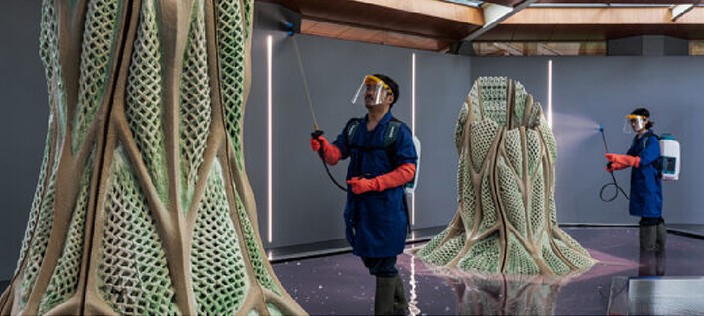
An interdisciplinary team at ETH Zurich has integrated photosynthetic bacteria into a printable gel, creating a living material that actively removes carbon dioxide from the air.
In the Canada Pavilion at the Venice Biennale, an exhibit by the Living Room Collective explores how the living material could be used in architecture. The 3D-printable building material is designed to help reduce the carbon footprint of future buildings and infrastructure.
145 Biltmore
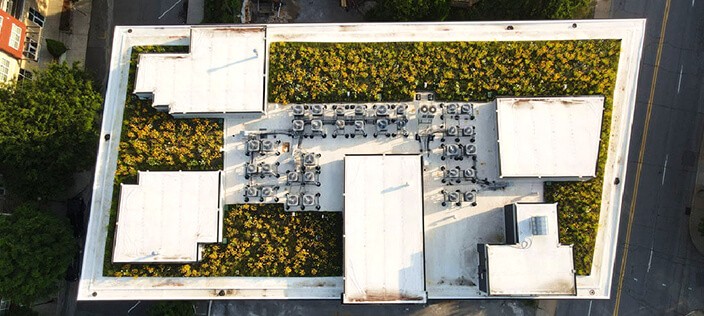
This award-winning vegetated roof atop a multi-unit residential infill building sets a new standard of resilience by reimagining the rooftop as stormwater infrastructure with the dynamic beauty of a wildflower meadow.
In addition to acting as a tremendously effective stormwater control, the vegetated roof addresses regional challenges of climate change, including biodiversity loss and urban heat island effect.
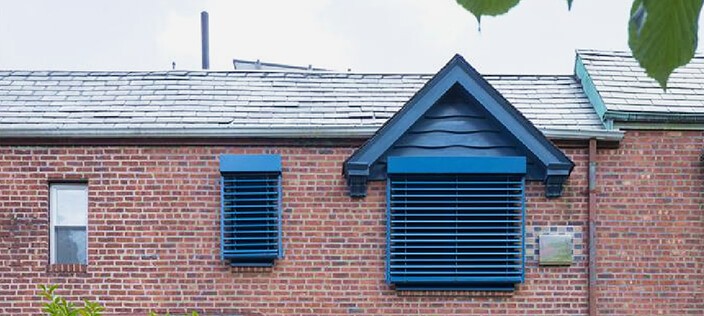
Tiny Queens Passive House
The new Passive House envelope makes this house Net Positive, with the solar array providing more than enough energy to cover the significantly reduced heating and cooling loads for heating water, an induction stovetop, and charging an electric vehicle.
South-facing openings received new operable exterior shades in bright blue, keeping the hot summer sun out before it has a chance to heat up the house.
Resources
Materials and tools to help decarbonize the world

Corn, of the industrial variety, is utilized for a wide range of sustainable applications due to its biodegradable and renewable properties. Additionally, it has a minimal impact on the global food supply and land use.
Explore the examples below and many other resources in our materials directory.
Susterra® propanediol is a 100% renewable, plant-based polyol used in making urethanes (a type of polymer). It enhances mechanical properties and offers benefits like improved flexibility, excellent resilience, and strong adhesion.
NatureWorks utilizes plants such as corn, cassava, sugarcane, or beets to capture and sequester CO2, transforming it into a range of polylactic acid (PLA) biopolymers. The applications include renewable paper coatings, bioplastics, 3D printing, and more.
UltiMaker PLA is a high-quality 3D printing material that can be printed quickly at low temperatures, while maintaining a high level of detail and strength. It is also compatible with dual-extrusion 3D printers, enabling the creation of two-color models.

Climate trends & strategies include tools that keep us informed about changing climate conditions, and help guide key decisions as we navigate our respective climate journeys.
Dive deeper and discover far more resources in our growing tools directory.
Stockholm Resilience Center is a research institute that addresses the sustainability challenges facing humanity, including climate change, biodiversity loss, and research from local food systems to global financial markets.
En-ROADS is an online simulator that provides policymakers, educators, businesses, the media, and the public with the ability to test and explore cross-sector climate solutions.
CLIMATESCOUT connects climate with architecture to help users create better-performing, responsive buildings by providing climate-specific design advice for the building site and scale.
Policy
Advancing climate action through legislation

National policies supporting decarbonization can be informed by ‘model laws’ that provide a starting place for discussion and collaboration among elected officials, non-profit groups, and the private sector. Below are just two examples, developed by the Model Climate Laws Initiative.
Compare states — leading or needing climate legislation now in our directory.
Carbon footprint product labels could influence consumers to make environmentally friendly choices without substantial effort on their part, by providing more information than the consumer currently has. This model law is adaptable at both the state and federal levels.
The circular economy represents a powerful new paradigm for materials consumption and solid waste management. Instead of beginning with extraction and ending with waste, the circular economy begins with material already in use, or else material designed for iterative uses, moves through production, and consumption, and into waste management, which secures a revived or altered source material, which is then processed and consumed again.
All states can be easily found in our alphabetical directory here

Our International directory connects designers to each country’s Nationally Determined Contributions (NDCs), industry advocacy groups, and how to participate. The NDCs make it easy to compare each country’s global greenhouse gas emissions (GHG) and gain a more comprehensive view of global climate action.
Explore countries — their NDCs and GHGs listed under the letter D.
Democratic Republic of Congo NDCs / 2021 / global GHG emissions: 1.45%
Denmark NDCs / 2020 / global GHG emissions: 0.09%
Djibouti NDCs / 2016 / global GHG emissions: 0.00%
Dominica NDCs / 2022 / global GHG emissions: 0.00%
Dominican Republic NDCs / 2020 / global GHG emissions: 0.07%
All countries can be easily found in our alphabetical directory here.
Lots
New initiatives to help decarbonize the world
WASTE TO VALUE
80% LESS CO2 EMISSIONS
100% HOME COMPOSTABLE
FluidSolids
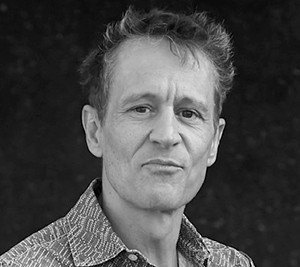
Beat Karrer is the Founder of FluidSolids, a technology platform and integrated solutions partner that utilizes your waste streams as a valuable resource to produce sustainable biocomposite materials.
Replacing traditional, petrol-based polymers with biodegradable FluidSolids composites opens a whole new world of business opportunities that utilize previously untapped natural resources and drastically reduce their environmental impacts.
Click MORE to learn about FluidSolids compostable solutions.

100% BIOBASED MATERIALS
MADE WITH BIOCHAR
LOCK CARBON AWAY
Ultima® Low Embodied Carbon Ceiling Panels
Shannon Weir is the Director of Mineral Fiber Product Management at Armstrong World Industries, responsible for the company’s new Ultima® Low Embodied Carbon (LEC) ceiling panels, which help reduce the carbon footprint of the built environment.
Ultima LEC panels include sustainably sourced, wood-generated biochar, which locks away carbon durably, as well as USDA verified to have 100% biobased content.
Click MORE to learn about these 100% biobased LEC ceiling panels.
ELECTRIC AIRCRAFT
LOWER COSTS
ELEVATED EXPERIENCE
Cosmic Aerospace
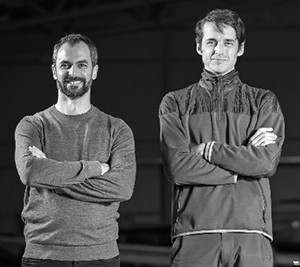
Christopher Chahine and Marshall Gusman are the co-founders of Cosmic Aerospace, developing an electric aircraft that makes regional air travel cleaner, quieter, and more economical.
With over 600 miles of range, the aircraft competes with regional jets while offering strong operating economics and a lower carbon footprint.
Click MORE to learn about the future of low-carbon regional air travel.
Listening & Reading Suggestions

World Resources Institute:State Of Climate Action (progress report)

Zero:Why Militaries Can No Longer Ignore Climate Change

Covering Climate Now:Making The Climate Connection

Carbon180:The Procurement Toolbox (policy report)

Carbon Direct:Carbon Removal Enters SBTi’s Corporate Net-Zero Standards