Spring 2026 / quarterly

Overview
I heard Stewart Brand describe his formative thoughts about time in 1998. Two years prior, Brand — the creator of the Whole Earth Catalog — had co-launched The Long Now Foundation to foster long-term thinking and greater responsibility in society, framed by the scale of deep time. 
I couldn’t have known then that I would cite him now, long after, though not very long after all. But any story about our climate today encourages us to think about time very differently than we naturally do.
The Time Tellers
Stories help people understand where they are — and what role they play — in life’s complex cycles, over long journeys. So it’s no wonder that some of the most vital stories about our relationship to the planet today are being told by a special kind of narrator: the Time Tellers. These are the geologists, physicists, and climatologists who see the Earth as its own archive. By reading proxy data — the stories written in the chemistry of ancient ice sheets and the rings of old-growth trees — they can see exactly how our climate has changed.
This isn’t guesswork; it’s a translation of the Earth’s own record. And it reveals to us the long-term time scale we live within — extremely slow-changing, almost imperceptible structures, such as geography and climate, that shape our history over millennia. The Time Tellers’ revelations don’t appear in crystal balls; they use backcasting to uncover patterns that describe the trajectory of this century with startling clarity. It is a story that is undeniably sobering, illustrating that while our climate has always shown us where it’s going, the current chapter is unprecedented and unprotected.
Procrastination of the Profound
Yet, despite what we know, humankind grapples with an evolutionary lag. We’re biologically built for short-term survival, not long-term planning. We are caught in what Stewart Brand calls a “pathologically short attention span,” sometimes known as the “procrastination of the profound” — our tendency to delay action on massive, life-altering problems because they don’t feel like emergencies right now. Our behavior isn’t a lack of intelligence; it’s a biological relic. We’ve always been wired this way.
It is the leaky roof in our design: on a sunny day, the repair feels like a dispensable expense, so we ignore the slow rot until the storm finally ruins everything below it. It’s the salt-damaged bridge in our infrastructure: salt air quietly corrodes the internal steel rebar for decades while the surface remains functional. We remain unaware that the structural integrity is gone until the moment of collapse.
Watching The Bellwether
To see this procrastination meet reality, watch the insurance industry. For decades, insurance has been the silent guarantor of our homes and businesses. Today, that safety net is fraying. Global insurers are the canaries in the coal mine; their math shows that climate change is no longer a “maybe,” but an accelerating, compounding liability.
As the costs of extreme wind, fire, and floods escalate, insurers are withdrawing from high-risk markets. When the financial guardians of our assets decline the risk, the story has moved from the abstract to the actual. The cost of inaction has finally caught up with the price of our collective safety.
Policy as Insurance
Our relationship with insurance is a mirror of our priorities. We readily hedge against the possibility of a car accident or a medical emergency, accepting the cost of the intangible to avoid the ruin of the catastrophic. If we can find the resolve to insure our cars and our health, surely we can find the resolve to protect our communities with the same foresight and investment.
Currently, few such policies exist. A rare benchmark, the 2022 U.S. CDRZ Act covers 90% of the costs for local resilience projects in targeted zones facing climate threats like coastal flooding, wildfires, and urban instability caused by the “heat island” effect. By shifting this financial burden, the Act serves as a collective insurance policy for the country’s most at-risk neighborhoods. Yet, while it establishes a national “insurance premium” for resilience, it remains critically underfunded relative to demand — leaving the majority of the 983 designated high-risk zones still waiting for the protection they were promised.
Climate change is no longer a hypothetical risk; it is a convergence of destabilizing conditions already affecting our global food and water security. For too long, we’ve viewed climate action as a financial sacrifice. But policy is ultimately the story we tell about what we value. This part of our climate story is told through the legislation we enact and the insurance we carry — two distinct ‘policies’ that must align as levers of power and protection. Together, a climate security policy is a declaration that we value the future as much as the present and are willing to design toward that end. It is a bold investment to ensure the stable conditions upon which all future profit and life depend.
Active Authors
Design can shape the story’s next chapter, just as we’ve shaped the built environment for centuries. Moreover, we can flip the narrative from inevitable loss to intentional restoration. Throughout this spring issue, you’ll find the inspiring work of leaders and organizations who are proving that we can be effective backcasters and active authors of a restorative future.
To join alongside others, we have included actionable steps in the How to Participate section below. By integrating climate-positive policies into a range of design strategies, our story will no longer tell of a race against the clock, but of the time we chose to restore our climate. Because the time is long, and now.
With you, we can do a lot more!

Lew Epstein
Founder / CEO
How To Participate
Climate action can feel overwhelming, but it doesn’t have to be. Whether you are just beginning to explore what you can do or are ready to lead the charge, there is a place for you. Let participation meet you where you are and grow from there.
Entering the Story
For those curious to “sample” actions and ease into their learning journey.
- Know Your Reps: Use tools like Common Cause to identify your local, state, and federal representatives. Research their voting records on climate and resilience bills to see if their priorities align with the “levers of power” you value.
- Follow the “Time Tellers”: Subscribe to a climate-focused newsletter or podcast to learn the language of climate resilience, emissions reductions, and carbon removal. Lot21 delivers a curated list of listening and reading suggestions through its free quarterly newsletter, making it easier to stay informed when your time is limited.
- Start at Home: Begin a local composting effort. By diverting food scraps from landfills, you reduce carbon emissions and create nutrient-rich soil for your community. Composting is a gateway action that can start at home and, over time, extend to your municipality, with measurable impact.
Diving into the Script
For those ready to join a group and dedicate more time to community efforts.
- Join a Value-Based Group: If your elected officials aren’t championing climate policy, look to your professional, social, or religious organizations. Many have “Green Teams” or advocacy groups that align their community’s values with climate actions, including scripted outreach to your elected officials.
- Support the Energy Transition: Join a local renewable energy campaign, such as a Community Solar program. These initiatives help neighborhoods transition from fossil fuels to renewable energy by making solar power accessible to renters and homeowners alike without the need for placing panels on individual rooftops.
- Attend a Planning Meeting: Show up to a city council or zoning board meeting. When local leaders discuss infrastructure or Community Disaster Resilience Zones, your presence ensures that long-term safety is prioritized over short-term gain. Your voice becomes the insurance policy for your community’s future.
Joining the Future
- Professional Advocacy: Under the leadership of trained organizers, help canvas for climate-positive policies. Sending mailers, making phone calls, and knocking on doors are the most effective ways to influence how policies are negotiated and voted on. To find advocacy organizers, visit mobilize.us and simply search with the keywords “climate” and your zip code. *Find several more organizations below.
- Influence Policy Funding: Write to your representatives specifically about the funding gap in the CDRZ Act. Demand that the “983 high-risk zones” receive the actual budget required to protect the people living within them, and advocate for expanding these safeguards to more communities.
- Gain a Seat at the Table: Run for a seat on your local environmental commission or planning board. Being in the room where decisions are made allows you to bake climate security into the very design of your city, moving from an advocate to an “Active Author” of policy.
Also, take a minute to check out Lot21’s Resources and Policy directories for more ideas about how you can participate. And we love receiving your questions at info@lot21.org.
*Professional Advocacy Organizations:
- Citizens’ Climate Lobby is nonpartisan and teaches citizens how to talk to their representatives and advocate for specific policies.
- Environmental Voter Project is a data-driven organization that identifies millions of non-voting environmentalists and turns them into consistent voters.
- For design professionals and students, consider these industry organizations: Achieving Net Zero / AIA Advocacy / ASLA Advocacy / Carbon Leadership Forum Advocacy / USGBC Advocacy
Projects
Collected works at the forefront of climate action
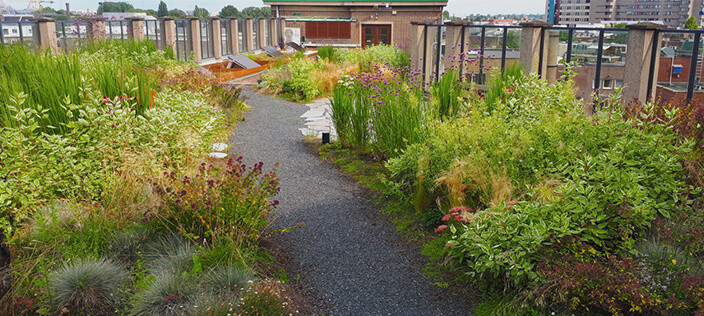
Resilio Smart Blue-Green Roofs
RESILIO showcases a pioneering approach to adaptation by turning several Amsterdam rooftops into a coordinated water management network, which optimize water levels to maximize capture during downpours.
By replacing impermeable surfaces with water-storing landscapes, the initiative enhances local ecology. This project serves as a benchmark for nature-based solutions that utilize smart technology to protect vulnerable metropolitan areas.

543 Hortus
Operating as a material bank, this project uses an energy-harvest model to ensure that emissions from construction and operations are fully mitigated after 31 years.
The strategy focuses on disassembly using dry mechanical joints. Avoiding permanent bonds, the structure preserves material purity, allowing timber and clay elements to be repurposed indefinitely by adhering to cradle-to-cradle principles.

Carbonwave
Carbonwave transforms Sargassum into valuable biomaterials by harnessing one of the fastest growing biomasses on the planet. Advancing this new seaweed-based pathway can sequester a gigaton of CO2 per year if deployed at large scale.
Their materials create next-generation alternatives across agriculture, cosmetics, and advanced materials, helping replace petroleum-based inputs, improve on existing industry standards, and reduce emissions across key economic sectors.
Resources
Materials and tools to help decarbonize the world

Mycelium, a mushroom’s underground root-like structure, is a remarkable natural material with numerous applications in construction, packaging, furniture, and fashion. Grown from organic waste and agricultural byproducts, it forms biodegradable products.
Explore the examples below and many other resources in materials directory.
Ecovative is building the foundation for a new materials economy. Their team of mycologists, engineers, and business folks are united in creating material abundance through mycelium technology for products, packaging, and bio fabrication applications.
Grown.bio is a biotechnology company on a mission to eliminate plastic foam in Europe and create a livable future for generations to come. Based in the Netherlands, Grown.bio was the first company licensed to use Ecovative's mycelium technology in Europe.
Mycocycle transforms construction waste into low-carbon raw materials for the built environment, using its patent-pending process to improve the natural functions of fungi. Optimizing logistics, disposal, and processing the Mycocycle model reduces CO2 emissions while offering a zero-waste solution.

Material transparency builds essential trust between designers, suppliers, and consumers. By applying rigorous LCAs and EPDs, stakeholders quantify embodied carbon and verify carbon storage claims, turning opaque supply chains into accountable systems.
Dive deeper and discover far more resources in our growing tools directory.
Common Materials Framework CMF is a tool for anyone looking to make more ‘mindful’ decisions about materials. By organizing how different certifications and standards contribute to the 5 buckets of health identified in the Materials Pledges, the CMF allows individuals and companies to turn their ‘why’ into ‘how’.
The RESET Embodied Standard offers a set of assessment tools and services, built on their Origin data hub. It is focused on data quality and transparency to help the built environment become healthier and more sustainable.
Acelabs is an all-in-one materials platform that allows you to research, specify, and manage building materials seamlessly, simplifying materials management so that architects and designers can make better product choices.
Policy
Advancing climate action through legislation

National policies like the 2022 U.S. CDRZ Act, below, deserve our attention as climate-related event costs grow and become unmanageable. This Act functions like a government-backed national insurance policy for high-risk zones, but it demands significantly more funds to assist those most impacted by climate change.
Compare states — leading or needing climate legislation now in our directory.
The 2022 U.S. CDRZ Act anchors national resilience and stability against climate-caused hazards by pinpointing areas with significant risks and social vulnerabilities.
It designates resilience zones and targets vulnerable census tracts for federal protection. Five-year assessments are required to ensure these strategies adapt to the nation’s evolving climate conditions and its impacts.
Functioning as a national insurance framework, the Act provides technical and financial support for local mitigation efforts — shifting the burden of climate-driven instability toward a future of proactive management for climate-related risks. Yet, considerably more government funding is needed to fully implement this initiative.
All states can be easily found in our alphabetical directory here.

Our International directory connects designers to each country’s Nationally Determined Contributions (NDCs), industry advocacy groups, and how to participate. The NDCs make it easy to compare each country’s global greenhouse gas emissions (GHG) and gain a more comprehensive view of global climate action.
Explore countries — their NDCs and GHGs listed under the letter G.
Gabon NDCs / 2025 / global GHG emissions: 0.04%
Gambia NDCs / 2021 / global GHG emissions: 0.01%
Georgia NDCs / 2021 / global GHG emissions: 0.04%
Germany NDCs / 2020 / global GHG emissions: 1.43%
Ghana NDCs / 2021 / global GHG emissions: 0.03%
Greece NDCs / 2020 / global GHG emissions: 0.15%
Grenada NDCs / 2020 / global GHG emissions: 0.01%
Guatemala NDCs / 2022 / global GHG emissions: 0.08%
Guinea NDCs / 2021 / global GHG emissions: 0.09%
Guinea-Bissau NDCs / 2021 / global GHG emissions: 0.01%
Guyana NDCs / 2016 / global GHG emissions: 0.04%
All countries can be easily found in our alphabetical directory here.
Lots
New initiatives to help decarbonize the world

LEADING A NEW ERA
THROUGH NEW POLICIES,
CHAMPIONS, AND SCALE
Carbon Removal Alliance
Giana Amador is the Executive Director of the Carbon Removal Alliance, which works to catalyze a high-integrity carbon removal industry through federal policy and growth.
The Alliance has successfully championed the U.S. Department of Energy’s historic carbon removal purchasing pilot and advanced key legislative incentives for permanent carbon sequestration.
Giana is a leading expert committed to scaling diverse climate solutions, worldwide.

THALO CAPTURE
ENVIRONMENT ON THE
RACE TO NET ZERO
Thalo Labs
Dr. Brendan Hermalyn is Founder & CEO of Thalo Labs, which produces building decarbonization solutions, including a plug-in carbon capture system that removes atmospheric CO2 indoors with no disruption to your space or operations.
Every ton of CO2 captured is permanently stored by transforming it into a synthetic carbonate powder, ready to be blended into consumer and industrial products like low-carbon concrete for the built environment.

READY TO SCALE
OUR CARBON BALANCE
FOR FUTURE GENERATIONS
Sustaera
Cory Sanderson is the CEO, co-founder of Sustaera, which is fast-tracking the global transition to 2050 net-zero emissions through modular Direct Air Capture (DAC) technology.
Sustaera’s unique electro-thermal process, achieves capital costs significantly lower than traditional methods. Their water-positive system is ideal for diverse climates and water-stressed regions. This flexible approach is the cornerstone for an efficient ecosystem of carbon capture, sequestration, and utilization.
Listening & Reading Suggestions

A Matter Of Degrees:The Long Arc of Climate Action with Gina McCarthy
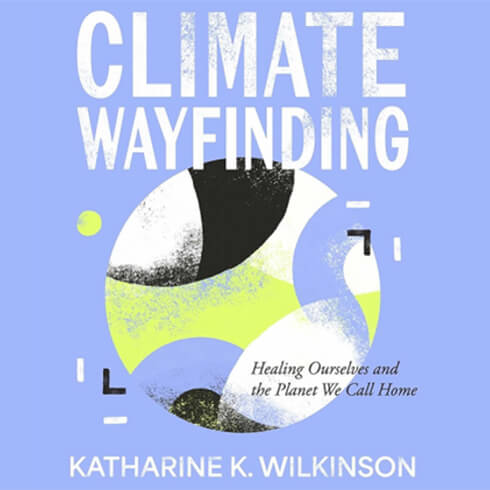
Climate Wayfinding:Healing Ourselves and the Planet We Call Home / Book

Open Air Collective:Carbon Removal Challenge

World Resources Institute:Keep Cool Innovation Challenge
Carbon Brief:Mapped — Revealing the Climate of Earth’s Distant Past

Zero:The Future of Climate Science Without US Support